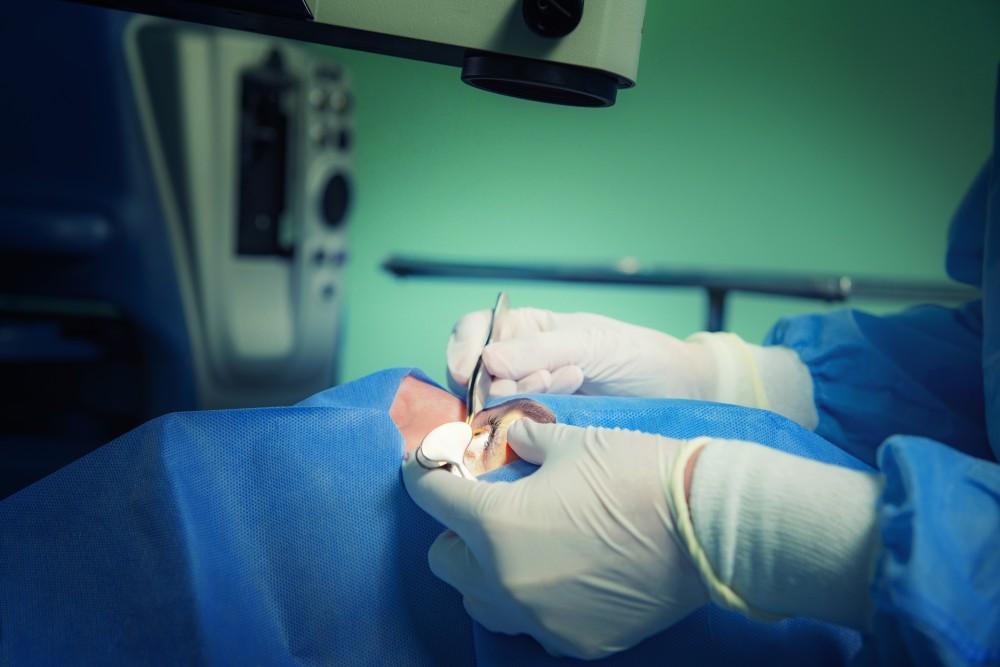
Why Is Blade Cut Cataract Surgery Preferred Over Laser?
Is laser cataract surgery worth the extra cost? Discover why standard blade surgery remains the gold standard for your vision.

Do your eyes constantly water, making your vision blurry? It is a frustrating problem that many people face daily.
At the private practice of Dr. Clayton Stevens, we help patients find relief from excessive tearing. Dr. Stevens provides comprehensive care for families in Biloxi, Mississippi.
Excessive tearing, or epiphora, often points to an underlying issue. It usually means there’s an imbalance in how your tears form or drain. We can help pinpoint the cause and restore your comfort.
It sounds backward, but dry eye disease is actually the most common cause of watery eyes. When your eyes lack proper lubrication, your brain triggers an emergency flood of tears.
Dry spots on an eye send distress signals to your brain. Your lacrimal gland then releases a surge of watery tears. But these emergency tears lack the natural oils needed to stay on your eye. They evaporate quickly, leaving your eyes dry and watering again.
To break this cycle, we offer personalized dry eye treatments. Using preservative-free artificial tears daily can help. Symptoms typically stabilize within a month of regular use.
We also help patients manage meibomian gland dysfunction, a condition in which clogged eyelid glands cannot release protective oils. Applying targeted heat therapy to the eyelids improves oil secretion to stabilize your tears.
Allergies and physical blockages in your tear ducts are other frequent causes of watery eyes. If seasonal allergies are the culprit, your eyes may also itch and burn. Topical antihistamine drops are often a first-line treatment to stop the allergic reaction directly on the eye.
Another common cause is a blocked tear duct, which prevents tears from draining. In a 2023 study of 53 adults with blocked tear ducts, a surgical procedure to bypass the blockage achieved 92.0% to 92.9% success in restoring normal drainage.
At our Biloxi office, we evaluate your tear drainage to see if a blockage is present.
You should see an eye specialist if your tearing is constant, occurs in only one eye, or is accompanied by pain.
The American Academy of Ophthalmology advises seeking prompt care for red-flag symptoms like vision changes or thick discharge. These symptoms can point to a serious infection or a structural eyelid issue.
If you experience sudden pain or injury, we also provide emergency eye care to protect your vision. Dr. Stevens will perform a gentle, thorough exam to check your tear film and drainage, then will create a customized plan to help you find lasting relief.
To get started, schedule a visit with our team today.