
What Causes Excessive Tearing and What Can I Do About It?
Are you constantly wiping away tears? Discover why dry eyes or blocked ducts cause watery eyes, and how we can help.
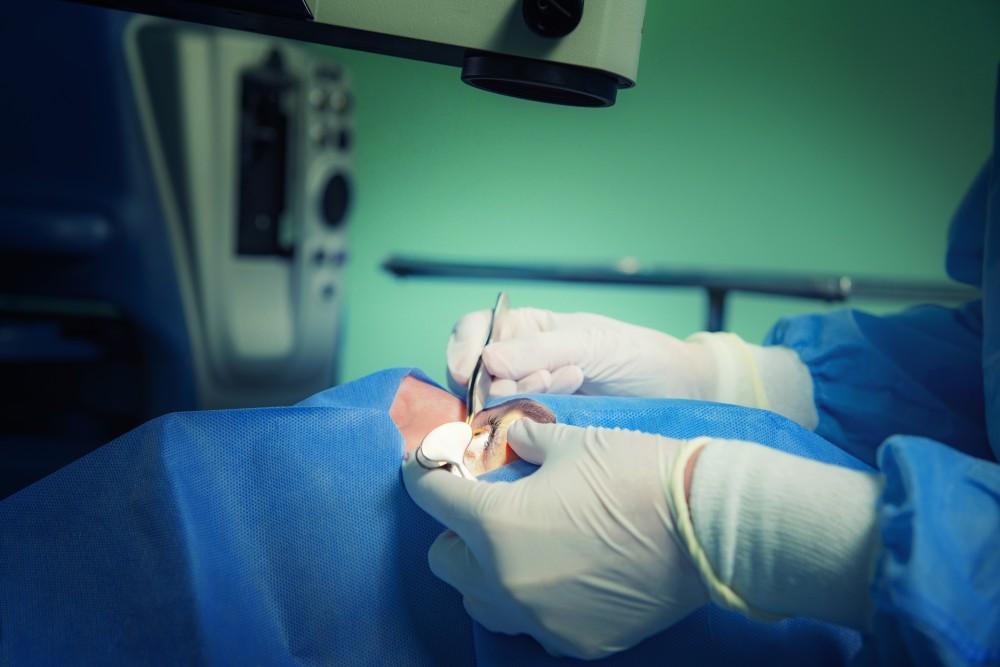
If you are facing cataracts, you want the safest and most effective treatment to restore your clear vision. You might have heard about laser-assisted cataract surgery and wondered if it’s better than the traditional manual blade method.
At Stevens Eye Care in Biloxi, Mississippi, Dr. Clayton Stevens helps patients navigate these choices every day.
While laser technology sounds advanced, standard manual cataract surgery remains the preferred choice for most patients. We focus on providing cost-effective, proven treatments that protect your eye health without unnecessary expenses.
No, standard manual surgery achieves the same excellent long-term results as laser surgery. While laser surgery can offer slightly faster healing in the first few days, the final outcomes are identical.
A systematic review analyzing 8,871 adult eyes, laser surgery showed slightly better vision at one week. But there were no differences in visual acuity beyond that first week.
This temporary difference happens because the laser reduces the ultrasound energy needed to break up the cataract, causing slightly less early swelling. At our Biloxi, Mississippi, office, we find that both methods lead to the same clear, sharp vision within a few weeks.
Yes, standard manual cataract surgery is exceptionally safe and has a complication rate equivalent to the laser-assisted method. Choosing the traditional blade does not put your eyes at a higher risk.
The same eye and vision review found no significant difference in overall surgical complications between the two techniques. Additionally, the American Academy of Ophthalmology states that laser technology has not been shown to have superior refractive outcomes or a better risk profile than standard surgery.
During the procedure, Dr. Stevens creates a microscopic incision and uses ultrasound to gently remove the cloudy lens. Because the critical steps of removing the lens are the same, your safety depends on your surgeon's skill, not the tool.
We prefer standard manual surgery because it delivers world-class results without forcing you to pay higher out-of-pocket fees. It is a reliable procedure that is widely covered by insurance.
Our patients choose this approach for several key reasons:
A systematic review noted that the high cost of laser technology does not translate to proportional improvements in quality of life. We believe in offering honest, cost-effective care. We do not want our patients paying thousands of dollars extra for a technology that does not offer a superior clinical outcome.
If you have other eye conditions like glaucoma or diabetic retinopathy, we customize your treatment plan to ensure the safest path forward.
If you are experiencing blurry vision or other signs of cataracts, we’re here to help you find the right solution. We guide you through every step of your care, from your initial evaluation to your recovery.
To discuss your options, schedule a visit with us at Stevens Eye Care in Biloxi, Mississippi, today.